
Jatinangor, August 24, 2025 — The kitchen serves as the heart of household activities but also poses one of the highest risks for domestic accidents, ranging from burns and cuts from sharp objects to fires caused by negligence. In response to these risks, the Permata Siaga Women's School held its fourth session on Sunday, August 24, 2025, at Al-Mukaromah Mosque, RW 13, Mekarasih Hamlet, Hegarmanah Village, Jatinangor District. The session focused on the theme of Kitchen Safety.
The event was attended by participants of the Permata Siaga Women's School, and featured a series of activities including a pre-test, presentation of materials, group discussions, role play, facilitation sessions (fasil time), a post-test, as well as ice-breaking activities and documentation.
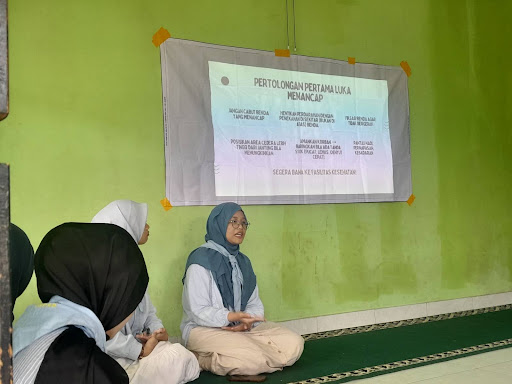
The main material was delivered by Elni Sunita and Ai Lusi Andini Karomah, members of the PNC, who explained the various potential hazards present in the kitchen. The speakers emphasized that the kitchen is not merely a place for cooking, but a complex area comprising several zones—ranging from food preparation and storage areas to sources of clean water.
Three key aspects that must be considered in kitchen design are comfort, health, and safety, with efficiency as an additional value. For instance, the height of the kitchen counter should be adjusted to the user's posture, proper ventilation and lighting must be ensured, and waste must be managed appropriately. The next session focused on kitchen waste management. Participants were taught to separate organic and inorganic waste, utilize used coffee grounds or tea leaves as compost fertilizer, and process used cooking oil to prevent environmental pollution.
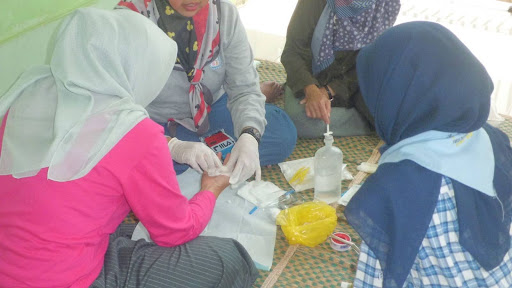
To enhance comprehension of the material, participants were engaged in interactive discussions and kitchen accident case role plays facilitated by the organizing team. During the role play and fasil time sessions, participants were not only encouraged to discuss but also to directly practice basic first aid techniques commonly needed in kitchen-related injuries. Under the guidance of facilitators, participants learned how to stop bleeding, clean wounds using a saline (NaCl) solution, and dress the wounds with sterile gauze and adhesive bandages.
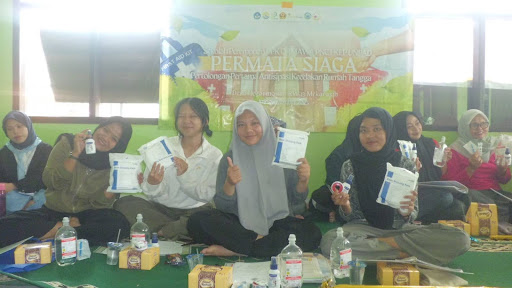
Interestingly, during this session, Permata Siaga also distributed basic wound care kits to participants. These kits included saline solution (NaCl), adhesive bandage rolls, antiseptic spray, and sterile gauze. This initiative is intended to enable the women participating in the program to directly apply the knowledge gained when facing emergency situations at home.
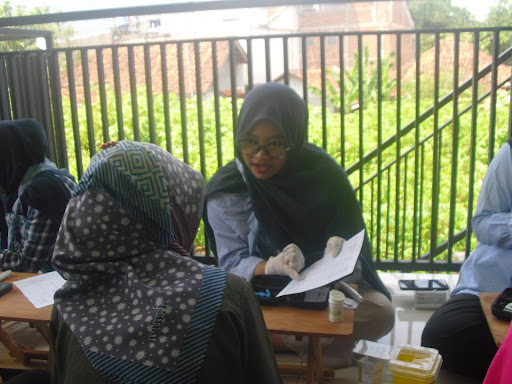
The activity became more lively with the inclusion of ice-breaking sessions, which helped energize the participants and foster closer interactions among them. As in previous sessions, the organizing committee also provided health check-ups, including blood pressure and uric acid level measurements, as a form of concern for the participants' overall well-being.
This fourth session reaffirmed Permata Siaga's commitment to supporting the Sustainable Development Goals (SDGs), particularly SDG 3 (Good Health and Well-being) and SDG 5 (Gender Equality). Through the provision of practical knowledge on kitchen safety, rural women are expected to play an active role in ensuring household safety while also protecting the health and well-being of their families.
 EN
EN  ID
ID
Leave a Reply