
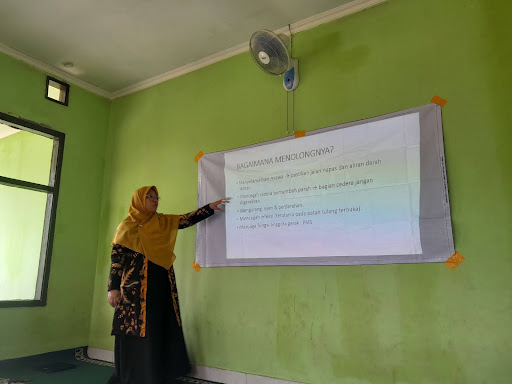
Jatinangor, August 23, 2025 — The Permata Siaga Women’s School held its third session themed “Prevention of Falls and Injuries in the Household.” This event took place on Saturday, August 23, 2025, at Al-Mukaromah Mosque, RW 13, Mekarasih Hamlet, Hegarmanah Village, Jatinangor District. The session was led by Ristina Mirwanti, S.Kep., Ners., M.Kep., a lecturer at the Faculty of Nursing, Padjadjaran University, who also serves as a mentor for the Padjadjaran Nursing Corps.
The material presented highlighted the fact that falls are common among both children and the elderly. In children, falls are often triggered by high curiosity, limited awareness of danger, and insufficient supervision. Meanwhile, in the elderly, risk factors include declining vision, muscle weakness, balance disorders, and side effects of medication. The home environment also frequently increases the risk of falls, with factors such as slippery floors, poor lighting, and cluttered objects.
Participants were equipped with fall prevention strategies for various areas of the home, such as:
- Bedroom: maintaining orderly furniture arrangement, ensuring adequate lighting, and providing bed safety rails.
- Kitchen: storing items at waist to chest height, ensuring proper ventilation, and keeping floors non-slip.
- Bathroom: using anti-slip sandals, installing handrails, and providing shower chairs for the elderly.
- Stairs & Floors: ensuring obstacle-free pathways, sufficient lighting, and securing carpets or cables to prevent tripping hazards.
In addition to prevention, this session also covered the management of fall-related injuries, such as fractures, dislocations, sprains, and head trauma. Participants learned the RICE principle (Rest, Ice, Compression, Elevation) as well as proper and safe first aid procedures to be administered before referring the victim to a healthcare facility.
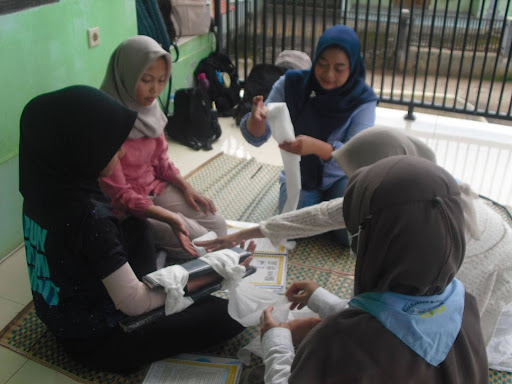
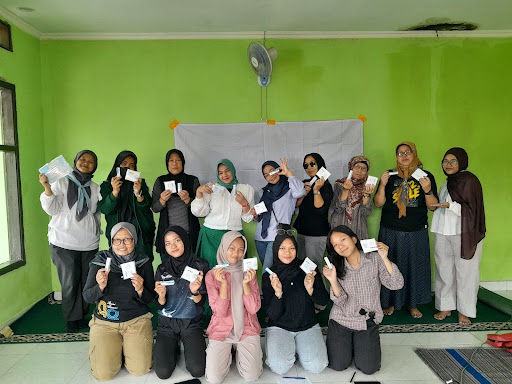
As a form of tangible support, Permata Siaga distributed pain-relief ointments to assist in managing muscle pain, as well as mitela (simple arm slings) for bandaging and immobilization purposes. With this equipment, participants are expected not only to understand the theory but also to perform emergency actions quickly and accurately in their own homes.
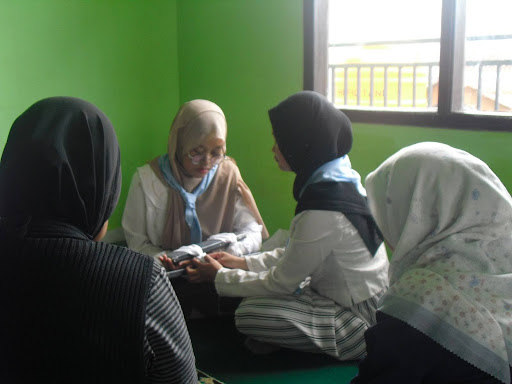
Following this, participants were given the opportunity to ask questions and engage in discussions to make the material more relevant to their daily experiences. To facilitate easier understanding of practical actions, the organizing committee prepared role-play scenarios involving falls and injuries, which were performed together with the participants. This was followed by fasil time—group guidance sessions led by the committee to ensure that every participant thoroughly mastered the first aid procedures.
In addition to the main activities, the program included ice-breaking sessions designed to lighten the atmosphere and maintain participants’ concentration. Through light and interactive games, participants were not only invited to take a brief break from the material but also to foster a sense of togetherness and camaraderie. This more relaxed environment helped participants stay focused during subsequent learning sessions.
The third session’s activities were systematically organized to ensure that participants not only understood the theory but also could practice the skills in the field. The program began with a pre-test to assess participants’ basic knowledge of fall and injury risks at home. At the end of the session, participants also took a post-test to evaluate improvements in knowledge and skills after completing the entire learning sequence.
Through this training, participants are expected to become more agile in preventing household accidents and providing appropriate first aid. This program is part of Permata Siaga’s ongoing efforts to support SDG 3 (Good Health and Well-being) and SDG 5 (Gender Equality) by empowering rural women as agents of change in family health.
 EN
EN  ID
ID
Leave a Reply